+49 (0)9341 1776



Width adjustment on multi-rip saws – flexible longitudinal cutting
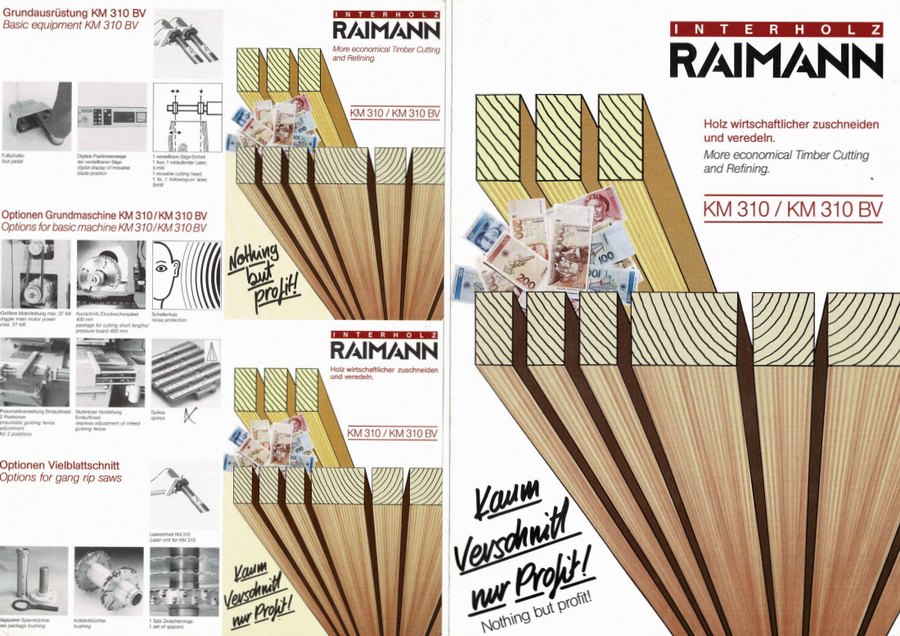
Width adjustment allows the cutting widths of a multi-rip saw to be changed by positioning individual saw blades laterally. The cutting pattern can therefore be adapted to different board widths and required workpiece dimensions. The technology supports both edging and ripping solid wood into several blanks.
Operation and construction
One or more saw blades can be moved across the feed direction. This changes their distance from a fixed reference blade or other movable blades. Depending on the machine design, movable blades can be combined with fixed blade sets. Adjustable cutting widths therefore do not require a fixed blade set to be rebuilt with different spacers for every change.
Depending on the configuration, positioning is operated through controls or a programmable control system. Position displays assist setting, while fixed or moving lasers can indicate the cutting lines on the timber. Adjustment ranges, minimum blade spacing and the number of movable blades depend on the individual machine design.
Applications
Multi-rip saws with width adjustment are particularly useful for timber of varying widths and jobs requiring different cutting dimensions. The cutting pattern can be adapted to the available material to make better use of its width and limit edge waste. Typical applications include strips, lamellas and blanks for furniture, windows, doors and other solid-wood products.
Application and classification
Blade adjustment provides flexibility in width cutting. It does not necessarily include automatic timber measurement or calculation of the best cutting pattern. Such optimisation functions require additional measuring and control equipment. The permissible conditions for adjustment also depend on the particular machine construction.
Timber yield depends not only on the cutting pattern but also on factors such as timber shape and quality, saw kerfs and required finished dimensions. Universal savings figures cannot therefore be attributed to width adjustment alone.